
Snap-action is the defining mechanism of a micro switch. It ensures that internal contacts switch states at a consistently high speed, regardless of how fast or slow the external actuator is moved. This rapid transition is essential because it minimizes the duration of the electrical arc (arcing). By reducing arc time, the switch experiences less wear and can reliably handle larger electrical loads while maintaining a compact size.
Learn more about snap-action micro switch
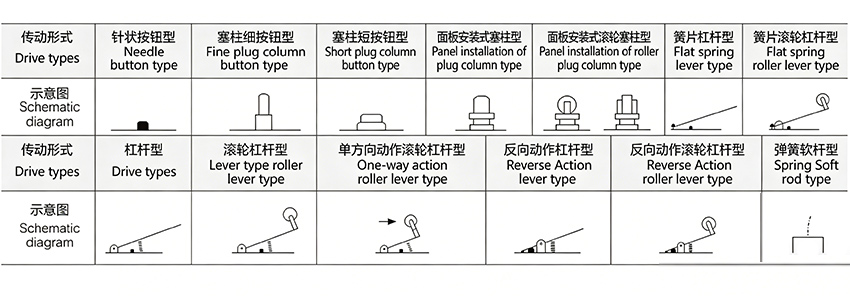
The actuator is the external part of the switch that receives physical force from a machine or operator. Its primary function is to transfer this force to the internal spring mechanism, which then triggers the contacts. In the world of basic switches, actuators come in various designs, such as push buttons, hinge levers, or roller levers, depending on the requirements of the application. Choosing the right actuator type is crucial for optimizing the mechanical life of the switch in specific motion paths.
These symbols define the wiring logic of a micro switch: NO (Normally Open), NC (Normally Closed), and COM (Common). Point A structures use two NO terminals, Point B uses two NC terminals, and Point C (Transfer contact) utilizes all three. Note that while a Point C structure can be wired as either A or B, it cannot function as a dual-separated 1a1b structure because the COM terminal is shared on one side.
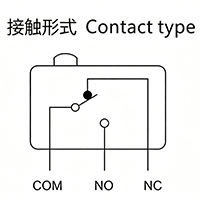
Learn more about How to Identify NO and NC of Micro Switch
Yes. A larger contact spacing (or contact gap) allows the micro switch to extinguish electrical arcs more efficiently when the circuit opens. Consequently, as the gap increases, the switch’s capacity to interrupt both voltage and current also rises. While the snap-action speed helps, the physical distance between contacts is a primary factor in determining the total switching capacity, making larger gaps particularly important for high-voltage DC applications.
The protective structure refers to the casing and sealing designed to prevent dust, water, oil, or solid objects from entering the switch. These levels are standardized via the IP (Ingress Protection) rating system, such as IEC 60529. Selecting the correct IP rating—like IP67 for waterproof needs—is critical for ensuring the longevity of basic switches in harsh or contaminated environments where standard open-type switches might fail due to carbonization.
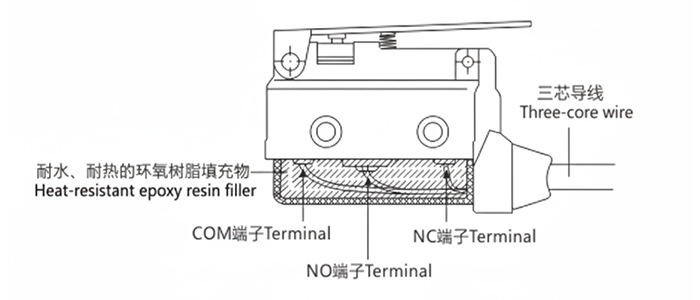
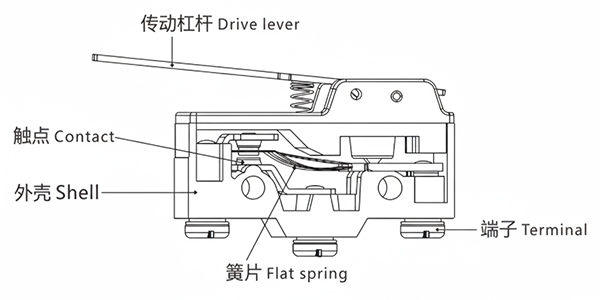
Learn more about Waterproof Micro Switches Features and Advantages
A Contact Switch (including micro switches and relays) is a device that opens or closes a circuit by physically moving mechanical contacts. This differs from “non-contact” semiconductor switches. The main advantages of this mechanical design in basic switches are superior electrical isolation, very low “ON” resistance, and robust protection against over-voltage, providing a cost-effective and durable solution for high-reliability industrial control.

 English
 Russian