
A Micro Switch is a critical electromechanical component used for circuit control, position detection, and safety interlocking. Its reliability, durability, and the electrical load capacity it can handle are determined not just by external factors like housing and size, but crucially by its internal core: the contact structure and the materials used. Therefore, any in-depth analysis of a micro switch’s electrical performance must begin with the selection of the contact material.
The choice of contact material is a complex multi-objective optimization problem, requiring a strict balance between three core performance aspects: high conductivity (minimal energy loss), arc erosion resistance (for long life), and oxidation resistance (for stable contact resistance). Due to the inherent conflict in these properties—excellent conductors like pure silver are soft and prone to oxidation, while harder silver composite materials sacrifice some conductivity—materials must be customized. This trade-off directly determines whether the switch is suitable for high-current power circuits or weak logic signal circuits, ultimately reflecting in the two most critical quantifiable performance indicators: rated load capacity and electrical life.
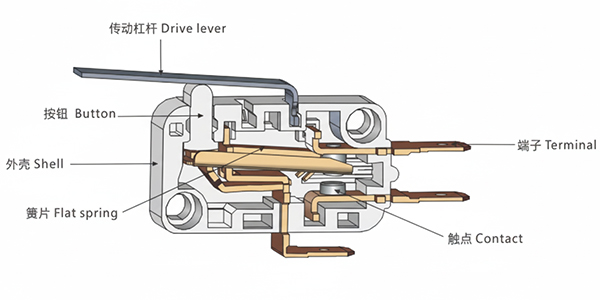
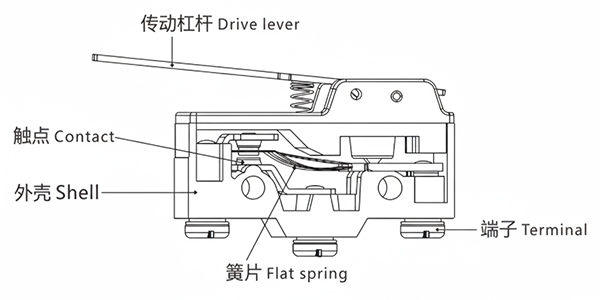
Key Performance Indicators of Micro Switch Contacts
In micro switch selection, it’s important to choose a reliable micro switch supplier. Crucially, the contact material is a decisive factor for the following two key performance parameters:
Rated Load: Refers to the maximum current and voltage the contacts can safely and reliably make and break. In high-current applications, load capacity is mainly limited by the contact material’s resistance to welding and arc erosion. By selecting contact materials of different strengths, micro switches can achieve a wide range of current ratings, typically from 1A up to 21A.
Electrical Life: Refers to the number of operating cycles the switch can reliably maintain at its rated load (usually measured in millions or tens of millions of cycles). For micro switches, the electrical life often needs to reach several million or even tens of millions of cycles. The decay in life is caused by the accumulation of physical wear and chemical changes on the contact surface during each switching operation.
Related reading: Micro Switch Selecting Guide
Contact Failure Mechanisms Under Load: The Root of Performance Degradation
The degradation of a micro switch’s electrical life and rated load capacity stems from the physical and chemical damage the contacts inevitably suffer during operation. Optimizing the contact material is an engineering defense against the primary failure mechanisms specific to different circuit environments. Therefore, a deep understanding and accurate anticipation of these failure modes are the starting point and fundamental basis for contact material selection decisions.
1. High-Current Load Failure: Welding and Material Erosion
When contacts are used to control larger currents (typically ≥5A), the main challenges arise from energy release and high thermal effects:
Arc Erosion: At the instant the contacts separate, the current does not immediately interrupt; instead, it jumps the air gap, forming a high-temperature electrical arc. The intense heat of the arc instantaneously vaporizes and melts the contact surface material, causing physical loss and altering the contact’s geometry, which affects the switch’s precision and stability.
Material Transfer and Welding: Localized high temperatures during the making or breaking process can cause the metal to melt. If the contacts rebound or close incompletely before the arc is extinguished, the molten metal may bond together, leading to a permanent adherence (welding). This is the most fatal failure mode in high-current switches, preventing the switch from opening again.
High-Load Material Requirements: For high loads, materials must possess a high melting point, high hardness, and excellent resistance to welding and arc erosion.
2. Signal-Level Load Failure: Oxidation and High Contact Resistance
When contacts are used to control minimal current and voltage (typically ≤100mA), especially for transmitting logic signals, the main risk is the stability of the contact resistance:
Oxidation/Sulfidation: Most highly conductive metals (like silver) will form a thin film of high-resistance oxide or sulfide when exposed to air.
Dry Circuit Challenge: At extremely low voltages (e.g., 5V) and minuscule currents, the energy generated when the switch closes is insufficient to “break through” or disrupt this insulating oxide film. This leads to a sharp increase in contact resistance (i.e., “poor contact”), causing signal transmission failure.
Low-Load Material Requirements: For low loads, materials must possess excellent chemical inertness (resistance to oxidation/sulfidation) and guarantee a consistently low contact resistance.
Common Contact Material Types
To address the stability of dry circuits and the endurance of high-power circuits, the industry has classified micro switch contact materials into three major systems based on different electrical load environments and reliability requirements. Each system optimizes a specific key performance trait to ensure the switch achieves optimal electrical life in its designated application.
1. Silver-Based Composites: Power Control Applications
Pure silver has excellent conductivity but poor anti-welding properties under high current. Therefore, industry practice is to embed oxides or metals like nickel into the silver matrix, forming a composite material. This sacrifices a minimal amount of conductivity for a significant gain in mechanical and electrical stability.
| Material Type | Abbreviation | Core Optimization Goal | Typical Application Positioning |
|---|---|---|---|
| Silver Cadmium Oxide | AgCdO | Arc erosion resistance, anti-welding capability. CdO particles reinforce the matrix. | High-load power switching (10A ~ 25A), widely used in large currents and surge applications like household appliances, industrial power supplies, and electric motors. |
| Silver Nickel Alloy | AgNi | Environmental compliance, hardness, wear resistance. Nickel increases hardness and arc resistance, serving as a RoHS alternative to AgCdO. | Medium to high-load eco-friendly applications (1A ~ 16A), suitable for power supplies, industrial controls, and automotive electronics with strict environmental requirements. |
| Silver-Based Alloy (e.g., Billon) | Billon/Ag | Balances conductivity and mechanical strength. Billon refers to specific silver alloys or composite ratios. | Medium-to-low load high-protection applications, suitable for automation equipment, industrial controls, and automotive systems in harsh environments requiring high dust and water resistance. |
Application Summary: Silver-based composite materials are designed for resistive loads, inductive loads, and any application requiring high current-carrying capacity, offering maximum power switching capability and reliable electrical life (e.g., 20 million mechanical cycles).
2. Gold Plating: Signal and Logic Level Applications
Gold (Au) possesses exceptional chemical inertness, making it the most effective material for resisting oxidation and sulfidation.Application Summary: Gold plating sacrifices high current capacity (low melting point, poor arc resistance) for the most stable contact resistance and longest signal transmission life, ensuring the switch will not fail due to oxidation in weak signal circuits.
| Material Type | Abbreviation | Core Optimization Goal | Typical Application Positioning |
|---|---|---|---|
| Gold Plating | Au | Chemical stability, extremely low contact resistance. Never oxidizes, ideal for dry circuits. | Minimal current / Signal-level applications (e.g., DC5V 100mA or lower). Used for logic signals, sensor interfaces, and PLC inputs in precision electronic devices. |
Application Summary: Gold plating sacrifices high current capacity (low melting point, poor arc resistance) for the most stable contact resistance and longest signal transmission life, ensuring the switch will not fail due to oxidation in weak signal circuits.
3. Platinum and Palladium Alloys: High-Reliability Balancing Materials
Platinum (Pt) and Palladium (Pd) alloys offer performance that sits between silver and gold.
| Material Type | Abbreviation | Core Optimization Goal | Typical Application Positioning |
|---|---|---|---|
| Platinum/Palladium Alloy | Pt/Pd | High melting point, high hardness, and chemical stability. Stronger corrosion resistance than silver, better arc resistance than gold. | High-reliability medium-to-low current applications (<5A), often used in mission-critical fields with extreme reliability requirements (e.g., aerospace, medical equipment) and harsh environments. |
Application Summary: Due to their excellent corrosion resistance and higher melting point, Pt/Pd alloys offer higher durability than gold plating and more stable contact resistance than silver alloys under medium-to-low loads. They are the ideal choice for key application areas requiring long-term, extremely high reliability where cost is not the primary constraint.
Conclusion: Matching Contact Materials to Load Requirements
The reliability of a micro switch ultimately comes down to the systematic trade-off in contact materials. A switch’s performance is always caught in the fundamental tension between high conductivity and wear resistance. The dual core objectives—Rated Load Capacity and Electrical Life—are challenged by two major real-world failure modes: arc welding under high current and oxidative high resistance under micro-signals. The three engineering contact material systems are, therefore, not random choices but purpose-built classifications tailored to these specific failure mechanisms: from silver-based composites designed to handle high thermal shock, to gold plating ensuring signal integrity, and finally to platinum-palladium alloys aiming for ultimate endurance. The material chosen determines the switch’s electrical performance ceiling under a specific load.
In short, high-current applications should prioritize products with silver-based composite materials, while signal-level applications must focus on gold-plated specifications. Micro switch manufacturers design and produce switch series with different purposes and specifications based on a deep understanding of these properties, providing a rich selection for your project. When making the final selection, please use your project requirements and budget as the primary considerations. Feel free to contact us if you need further information on micro switch products or custom solutions.



 English
 Russian