
In automation control and various electronic systems, micro switches serve as fundamental sensing and actuating components. Their reliability directly impacts the overall operational integrity of the equipment. Due to prolonged high-frequency operation and exposure to complex working environments, these switches are inevitably susceptible to various failures. This guide provides a deep dive into electrical characteristics, mechanical structures, and installation practices to assist technical personnel in identifying root causes and implementing standardized corrective measures.
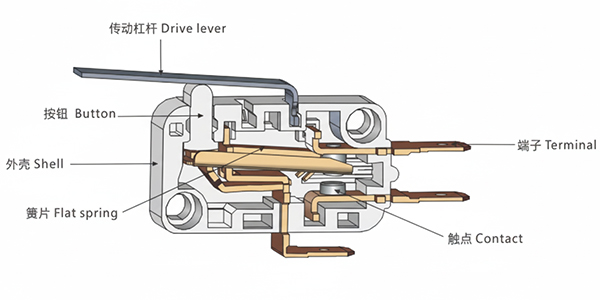
Electrical Performance Failures in Micro Switches
Electrical failures in micro switches are typically associated with current transmission quality, insulation integrity, and the physical-chemical reactions occurring at the contact points under demanding environmental conditions.
1. Contact Failure and Poor Connectivity
-
Symptom: The contacts fail to conduct or exhibit excessive contact resistance.
-
Root Cause Analysis:
-
Environmental Contaminants: Accumulation of dust, dirt, or oil on contact surfaces; or the ingress of water and other liquids into the switch housing.
-
Chemical Deposition: In atmospheres containing corrosive gases, or when switching extremely low loads frequently, non-conductive chemical films may form on the contact surfaces.
-
Process Contamination: Ingress of solder flux during the assembly process; or the presence of silicone-based gases near the switch, which can react under arcing to form silicone compounds.
-
-
Corrective Action: Eliminate environmental interference at the source. Transition to a higher sealing grade or house the switch in a protective enclosure. For low-load or corrosive applications, utilize contacts with high environmental resistance (e.g., gold or specialized alloys). Strictly audit soldering protocols and remove silicone-emitting materials to prevent compound buildup.
Related reading: How Micro Switch Contact Materials Affect Performance
2. Spontaneous Malfunction
-
Symptom: The micro switch triggers or resets unexpectedly without an external command.
-
Root Cause Analysis: External factors such as severe vibration or transient shock cause the closed contacts to momentarily separate or bounce.
-
Corrective Action: Deploy switch models with higher contact force (typically indicated by a higher Operating Force, or OF value) to enhance resistance to mechanical interference.
3. Contact Welding
-
Symptom: The contacts become fused or “stuck” together due to excessive load.
-
Root Cause Analysis: The electrical load connected to the switch exceeds its rated capacity, leading to excessive thermal energy during switching that melts the contact metal.
-
Corrective Action: It is recommended to use the micro switch as a pilot device to drive high-capacity relays or magnetic contactors. Alternatively, integrate contact protection circuits (such as snubber networks) to mitigate inrush currents.
4. Insulation Degradation and Burning
-
Symptom: A significant drop in insulation resistance, potentially leading to carbonization or catastrophic burning of the internal structure and housing.
-
Root Cause Analysis:
-
Arcing Damage: Intensive arcing causes molten metal to scatter onto insulating surfaces.
-
Thermal Stress: Usage in extreme high-temperature environments facilitates moisture ingress, compromising dielectric strength.
-
Carbonization Path: Liquid ingress subjected to the heat of the arc leads to carbonization, creating a conductive “track” across the insulation.
-
-
Corrective Action: Utilize high-capacity relays to switch heavy loads, thereby minimizing arcing at the micro switch level. Remediate environmental stressors by using sealed switches or protective enclosures.
Mechanical Characteristic Failures in Micro Switches
Mechanical failures in micro switches often stem from mismatched driving forces, improper actuation methods, or long-term fatigue.
1. Operating Failure
-
Symptom: The actuator fails to trigger the switch, or the switch fails to reset after actuation.
-
Root Cause Analysis:
-
Physical Damage: Excessive force applied to the actuator damages internal sliding components or causes the linkage to detach.
-
Mechanical Obstruction: Ingress of debris or grease hinders the physical travel of the mechanism.
-
Dynamic Imbalance: The external operating body is too heavy for the switch’s return spring, or loose mounting prevents the actuator from reaching the required Operating Position (OP).
-
-
Corrective Action: Ensure operating forces remain within specified limits or employ a mechanically reinforced auxiliary actuator. Maintain a clean environment and ensure the switch is securely mounted. If necessary, select a model with a higher Operating Force (OF).
2. Low Durability
-
Symptom: The micro switch suffers premature failure or a significantly shortened service life despite normal operating conditions.
-
Root Cause Analysis:
-
Design Incompatibility: The geometry of the driving cam or dog is poorly optimized, leading to uneven stress distribution.
-
Operating Deviations: Improper actuation methods or excessive operating speeds accelerate wear.
-
-
Corrective Action: Re-evaluate and optimize the profile design of cams or dogs. Audit the operating stroke and speed to ensure they align with the manufacturer’s specifications.
3. Structural Damage
-
Symptom: Visible deformation, detachment, or fracture of the actuator or switch body.
-
Root Cause Analysis:
-
External Impact: The actuator is subjected to striking or abnormal shock loads.
-
Assembly Defects: Poor caulking or inadequate internal assembly conditions.
-
Off-Axis Stress: The actuator is subjected to excessive force from an unintended (lateral) direction.
-
-
Corrective Action: Shield the switch from external impacts or upgrade to a more robust model. Replace switches that exhibit manufacturing or assembly defects. Review handling procedures to ensure actuation occurs only in the intended direction.
Related reading: What is Micro Switch
Mounting and Terminal Failures in Micro Switches
Standardized installation and terminal connection are the physical prerequisites for a micro switch to perform its intended function.
1. Mounting Risks
-
Root Cause Analysis: Screws are cross-threaded, over-tightened beyond torque limits, or mounted on an uneven surface. Incorrect mounting pitch can also cause housing stress.
-
Corrective Action: Standardize the screw insertion method and use a calibrated torque wrench. Ensure the mounting surface is flat and verify the hole pitch matches the switch specifications.
2. Terminal Connection Risks
-
Root Cause Analysis: Excessive tension applied to the terminals during wiring, or excessive heat during soldering that deforms the plastic base.
-
Corrective Action: Avoid applying mechanical stress to the terminals. Optimize the soldering process by controlling temperature and duration, and refer to specific safety precautions for the given model.
Conclusion
Micro switch failures are typically the result of a combination of environmental, mechanical, and electrical factors. By strictly adhering to selection specifications, optimizing installation processes, and choosing targeted protection based on specific operating conditions, the frequency of failure can be significantly reduced, thereby enhancing the stability and longevity of the entire system.
During the project planning and equipment development phases, we recommend selecting micro switches that precisely match your application requirements—considering load characteristics, operating frequency, and environmental protection levels. Partnering with a technically proficient and reliable micro switch manufacturer ensures long-term operational security. Should you require assistance with product selection, technical consultation, or customized solutions, please feel free to contact us. Our professional team is ready to provide tailored technical support and design recommendations.



 English
 Russian