
In the world of industrial automation and everyday electronics, the Micro Switch and the Limit Switch are two critical concepts. However, they are often confused with one another. While both can complete or break an electrical circuit, they have fundamental differences in function, structure, and application. Understanding their intrinsic relationship is key to unlocking the secrets of how automated equipment operates—it’s like understanding the relationship between a precise component and a complete system.
Micro Switches vs. Limit Switches: from Function to Structure
First, let’s start with their core definitions to clarify the fundamental differences. This is more than a simple definition; it’s an exploration of their design philosophies.
What is a Micro Switch?
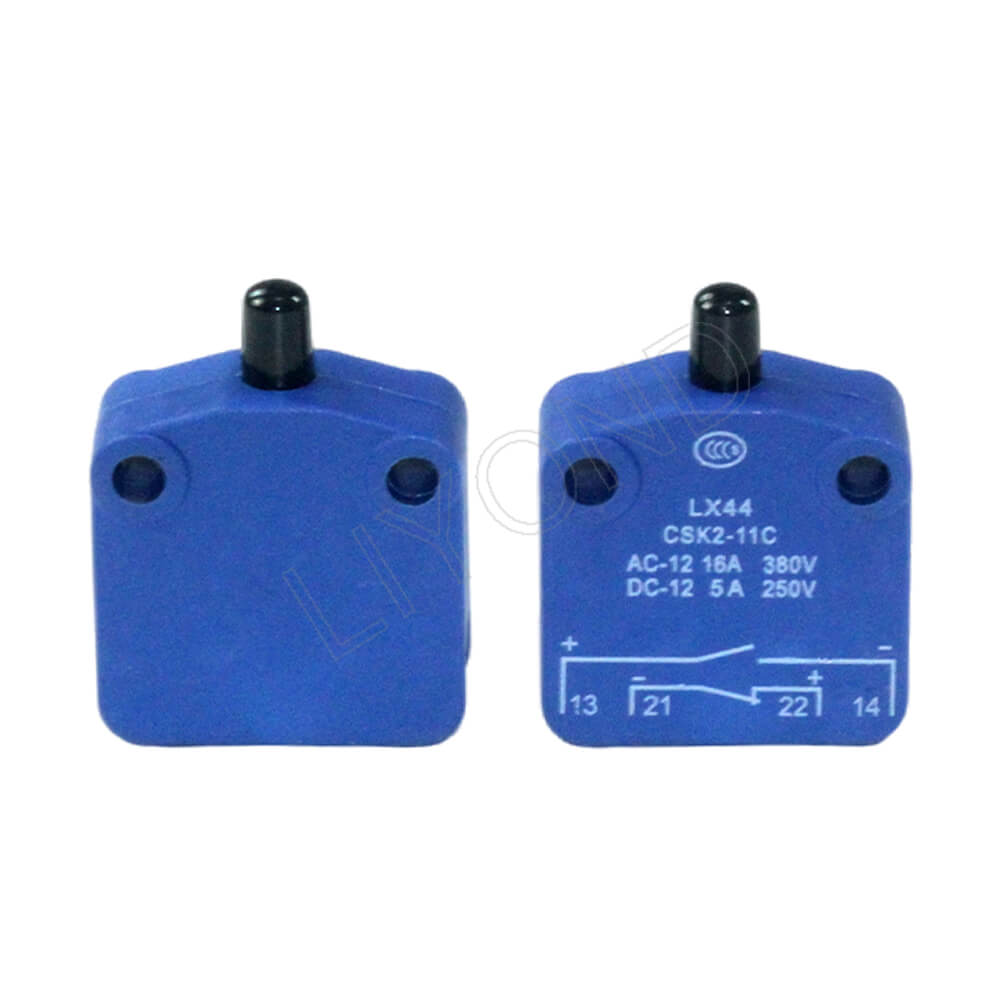
A micro switch is named for its internal structure. Its core feature is the unique snap-action mechanism. This mechanism ensures that the contacts quickly and reliably make or break a circuit with a very short travel, effectively preventing arcing caused by slow contact movement and greatly extending the switch’s life and reliability. It’s more of a general-purpose, high-precision electronic component, known for its small size, high sensitivity, and short travel. It acts as the “heart” for precise control in many delicate devices. To get the most out of these features, it’s essential to source your components from a reputable micro switch supplier that guarantees quality and precision.
Related reading: What is Micro Switch: Working, Features and Uses
What is a Limit Switch?
From a functional perspective, a limit switch is a control switch designed specifically to detect whether mechanical motion has reached a pre-set “limit” position. Its core value lies in “position detection” and “safety protection.” It is typically installed at the end of a machine’s travel, acting as a physical endpoint to prevent the equipment from exceeding its safe range. Think of it as a “boundary guard” on an industrial production line, ensuring the equipment operates within a defined safe zone. Therefore, to withstand harsh industrial conditions, it must be rugged and durable.
Related reading: What is Limit Switch: Working Principle and Core Functions
.jpg)
Four Key Differences Between Micro Switch and Limit Switch
Although micro switches and limit switches share some overlapping functions, comparing them side by side reveals significant differences across several key dimensions. These distinctions are not accidental; they are a direct result of their respective design philosophies and application requirements. From their robust external structures to their specific operating environments, and from their internal mechanical and electrical properties to their final trigger principles, each factor clearly outlines their unique identity and value. The two differ significantly in four core areas: Structure and Encapsulation, Application Scenarios and Environment, Mechanical and Electrical Characteristics, and Operating Principle and Trigger Mechanism.
Structure and Encapsulation
A limit switch typically consists of three parts: a robust protective outer casing (usually metal or high-strength engineering plastic), a variety of actuators (such as rollers, plungers, or levers), and the internal switch element. This “fully armored” design gives it excellent protection against dust, water (typically IP67 rated), and oil.
A micro switch is much smaller; its core component is either exposed or covered only by a simple plastic housing. The design focus is on the intricate internal snap-action mechanism. This difference in design philosophy means that limit switches prioritize robust external protection, while micro switches focus on a precise internal mechanism.
Application Scenarios and Environment
Limit switches are primarily used in harsh industrial environments like CNC machine tools, cranes, conveyor belts, and automated production lines for end-of-travel positioning and safety interlocking, where they must withstand challenges like dust, oil, and vibration.
Thanks to its small size and high sensitivity, a micro switch is widely used in consumer electronics that have strict requirements for size and operating force, such as computer mouse buttons, door switches in household microwaves, and car door latches. Its operating environment is generally cleaner and does not require a high degree of protection.
Mechanical and Electrical Characteristics
In terms of mechanical characteristics, a limit switch typically requires a larger operating force due to its external actuator and internal linkage mechanism. Its mechanical life is relatively low, but its durable housing makes it perform exceptionally well in industrial environments. In terms of electrical characteristics, its contact capacity is larger, allowing it to directly control high-power loads.
A micro switch generally requires a much smaller operating force, has a short travel, and offers extremely high repetitive positioning accuracy. Its mechanical life can reach millions or even tens of millions of cycles. Electrically, it is mainly used for signal sensing or controlling small currents. If a high current needs to be controlled, a micro switch is typically used in conjunction with a relay.
Operating Principle and Trigger Mechanism
A limit switch converts the physical displacement of mechanical motion into an electrical action of the internal micro switch via an external actuator. Its operating principle is: mechanical motion → actuator push → internal micro switch action.
A micro switch operates based on its internal snap-action mechanism, which completes the contact transfer with a minimal force and a very short travel. Its trigger is direct and instantaneous.
Intrinsic Relationship between Micro Switch and Limit Switch
By understanding their differences, we can see their deeper intrinsic relationship. Micro switches and limit switches are not in opposition but have a relationship of “inclusion” and “functional complementarity”.
“Inclusion” Relationship
In many cases, the core of a limit switch is one or more micro switches. The sturdy housing and external actuators of a limit switch are designed to protect its internal micro switch and transform its small, high-precision features into a robust function suitable for harsh industrial environments. You can think of a limit switch as a complete “product” that takes the micro switch, a “component,” and packages and expands its functionality to meet specific industrial application needs.
Functional Complementarity
Micro switches and limit switches are mutually complementary. The limit switch provides a physical interface (direct contact with mechanical motion via various actuators) and environmental protection, while the micro switch provides the core functions of high-speed electrical switching and high repetitive positioning accuracy. Without the protection and external linkage of a limit switch, a micro switch would struggle to survive in heavy-duty industrial environments; and without the precise action of a micro switch, a limit switch would lose its fundamental ability for high-precision position detection.
Guide to Proper Selection: Choosing the Right Switch
Correct selection is critical to ensuring a system’s stable, reliable, and efficient operation. After understanding their differences and relationship, the choice among the numerous models requires considering multiple factors. Here are some key areas to focus on when making a selection:
Choosing Based on Application Environment
In harsh, heavy-duty, or physically demanding environments, a limit switch is the primary choice. For example, on an outdoor crane, you need a limit switch that can withstand wind and rain. If the environment is clean, space is tight, and high sensitivity is required, a micro switch is a more suitable choice. For example, in a vending machine’s coin slot, you need a micro switch that can react quickly to a slight touch.
Choosing Based on Functional Requirements
For applications requiring high-precision positioning and small signal control with high sensitivity, prioritize a micro switch. An example would be in the precise positioning systems of medical equipment. When a direct control of high-current loads or safety interlocking is needed, a limit switch with the appropriate electrical parameters is the clear choice. For instance, in the emergency stop circuit of a punch press, a limit switch can directly cut off the main motor’s power, providing a reliable physical safety interlock for the equipment because it is capable of handling high current loads.
Related reading: Micro Switch Selecting Guide
Conclusion
In essence, a micro switch is a high-precision, compact, general-purpose electronic component that serves as the “heart” for precise switching in many devices. In contrast, a limit switch is a rugged, specialized, position-control device that, by integrating a micro switch and external mechanisms, becomes an indispensable “safety guard” in industrial automation. A solid understanding of the differences and relationship between limit and micro switches is the foundation for making the right selection and application decisions, which is key to ensuring the stability, reliability, and efficiency of any automation system.



 English
 Russian