





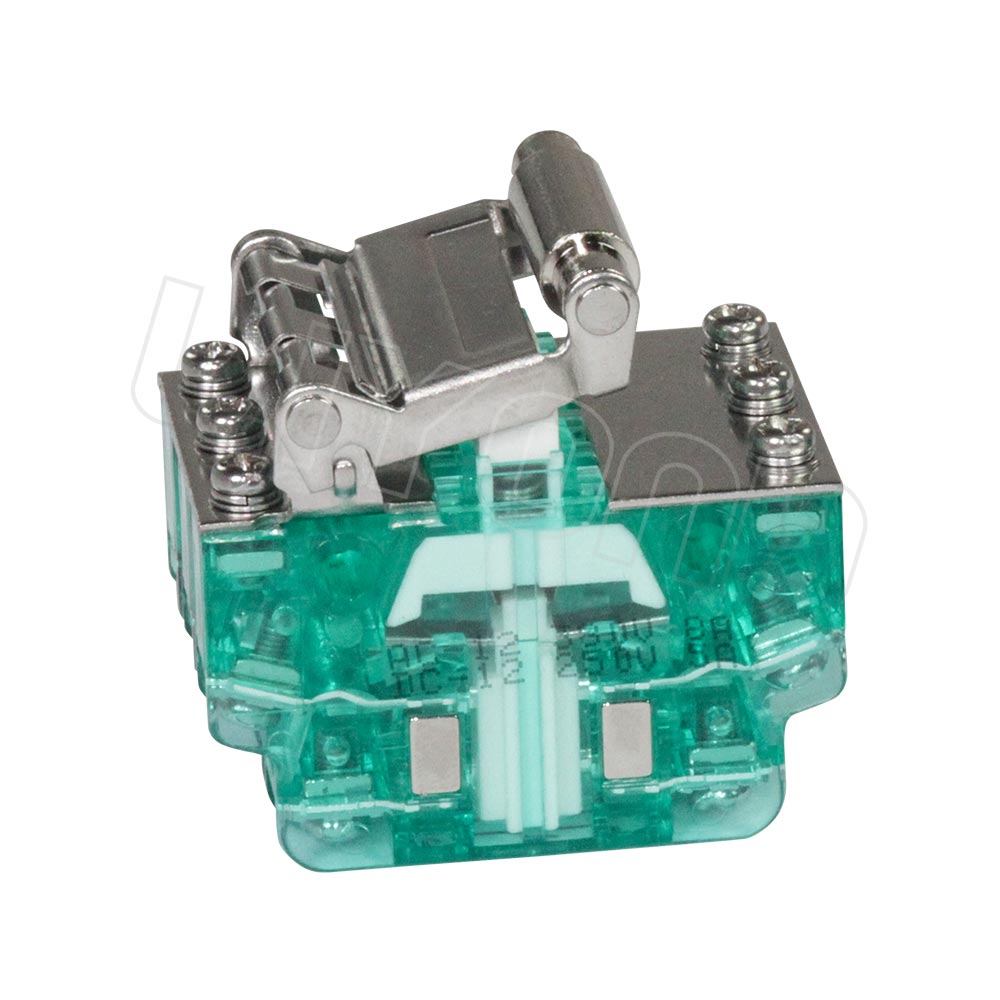
Integrated Permanent Magnet Arc-Extinguishing Mechanism
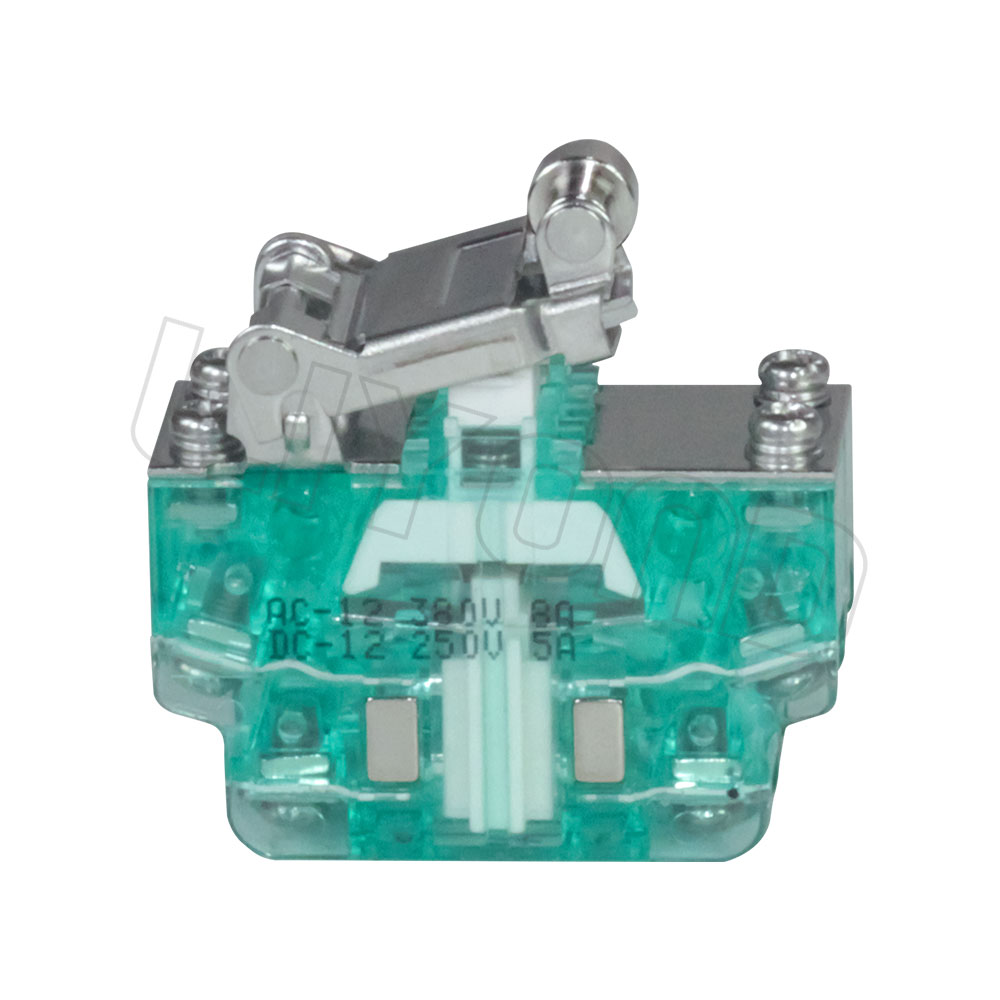
Specially designed for heavy DC inductive loads in switchgear control loops. The built-in permanent magnets generate a localized magnetic field at the moment of contact separation. This forces the DC electric arc to elongate and move rapidly into the cooling arc chute, eliminating contact burning and carbon deposition.
3NO + 3NC Synchronous Snap-Action System
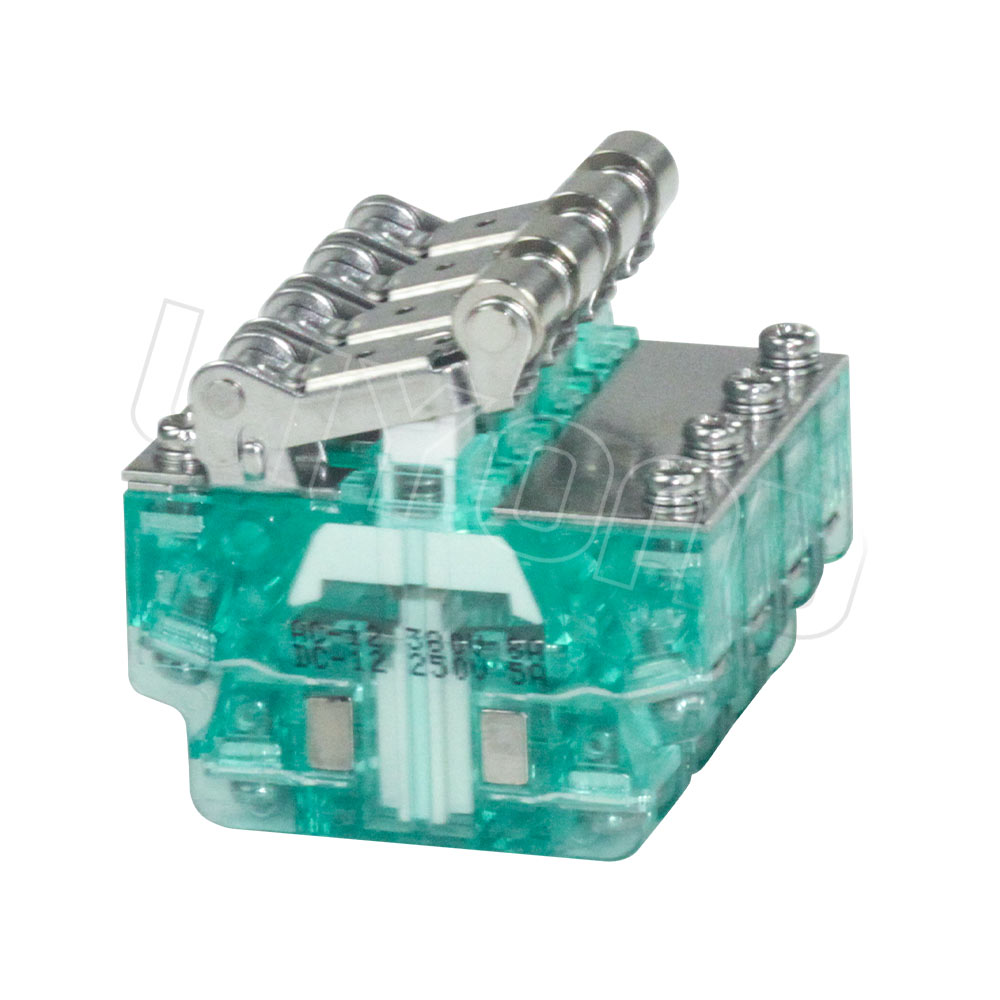
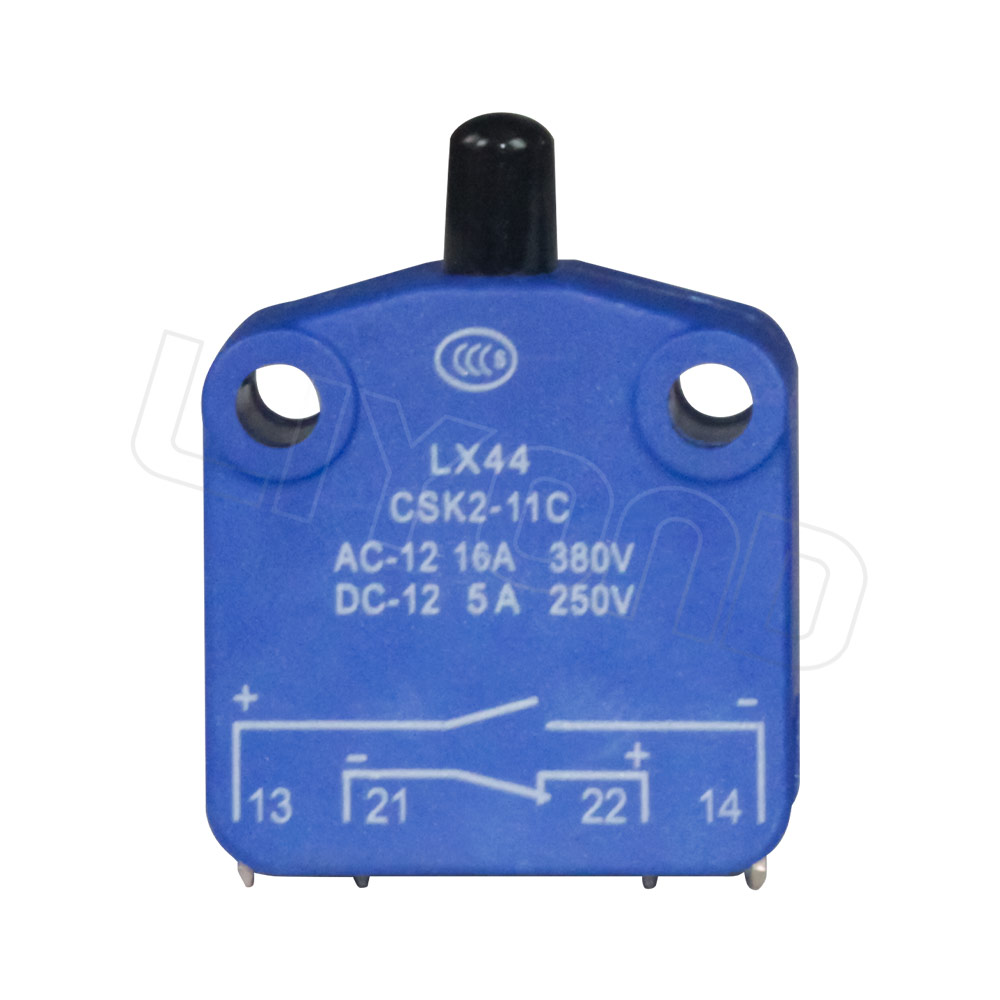
Features a simultaneous travel mechanism for 3 normally open and 3 normally closed circuits. The snap-action internal design ensures crisp, immediate contact transition without delay or contact floating, delivering millisecond-level signal feedback for mechanical interlocking.
Visual Inspection via Transparent Flame-Retardant Housing
Molded from high-insulation, green transparent polycarbonate. Operators can perform direct visual assessments of contact wear, position, or localized carbonization during routine inspections without dismantling the switch housing, reducing substation maintenance hours.
Low Contact Resistance for High Signal Integrity
With an initial contact resistance of ≤50 mΩ and silver alloy contact points, the switch maintains signal continuity under high-frequency mechanical vibration and continuous electrical cycling at DC 250V / 5A.
Standardized Form Factor for Direct Drop-In Replacement
Designed to standard mounting dimensions and wiring layouts used in KYN28-12 and KYN61 medium-voltage switchgear. This allows direct installation into existing breaker operating mechanisms as a precise technical alternative.
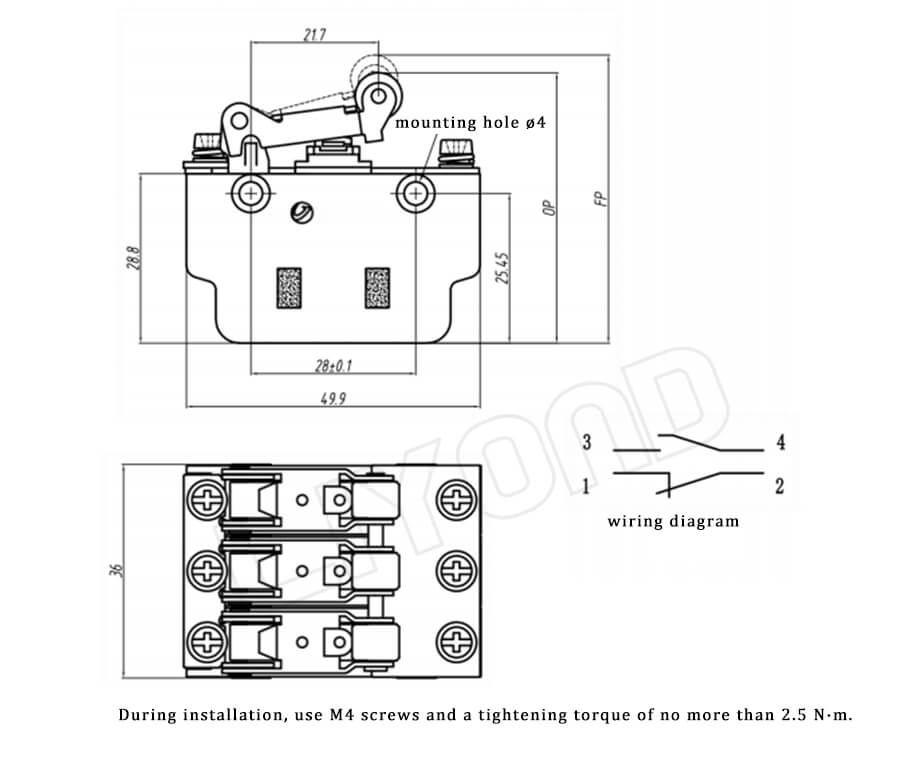
| Rated voltage | DC250V |
| Rated current | 5A |
| Heat distortion temperature | ≤120℃ |
| Insulation resistance | ≥100MΩ |
| Withstand voltage | AC1500V |
| Initial contact resistance | ≤50mV |
| OF | ≥600g |
| RF | ≥200g |
| PT | 3mm±1mm |
| Mechanical life | 1,000,000 times |
| Electrical life | 50,000 times |
| Terminal resistance | 1.2N |
Q1: What is the primary function of the magnetic blowout feature in the RCSK-1-33 switch?
A1: The magnetic blowout feature utilizes internal permanent magnets to generate a magnetic field that exerts Lorentz force on the DC electric arc generated during contact opening. This force drives the arc into the arc-extinguishing chamber, stretching and cooling it quickly. This process prevents contact pitting, material transfer, and contact welding under inductive DC 250V loads.
Q2: Can the RCSK-1-33 auxiliary switch handle both AC and DC control circuits simultaneously?
A2: Yes, the RCSK-1-33 features independent 3NO + 3NC contacts rated for different electrical limits. It handles AC 380V at 8A for AC control loops and up to DC 250V at 5A for DC inductive interlocking circuits, maintaining an insulation resistance of ≥ 100 mΩ.
Q3: How does the snap-action mechanism of this limit switch affect high-voltage breaker safety?
A3: The snap-action mechanism ensures that the speed of contact separation is independent of the speed of the external operating lever. This immediate, high-speed contact transit prevents prolonged arcing and delivers precise, synchronized position signals to the interlocking system of vacuum circuit breakers (VCBs), eliminating false signal outputs.

 English
 Russian